
// Practical Shooting
ARTICLE ID: SHO-TRA-UND
Understanding Hold Overs... and Hold Unders
A shooting technique guide on compensating for trajectory with hold overs and hold unders at different distances.
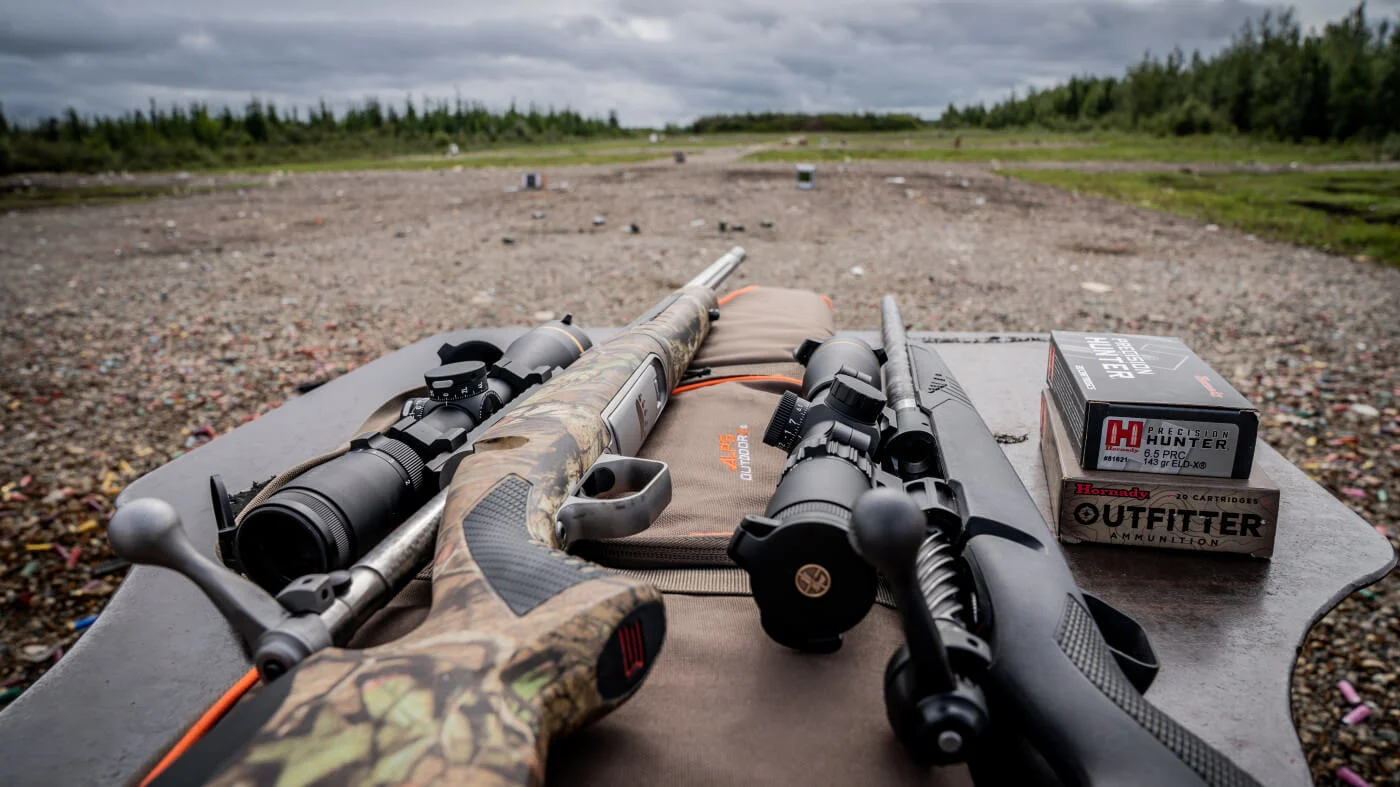
Hold overGlossaryHold OverAiming above the desired impact point to compensate for bullet trajectory, sight offset, or distance. and hold underGlossaryHold UnderAiming below the desired impact point when a zero or trajectory causes the shot to land high at a given distance. are two techniques used in shooting to compensate for bullet drop over long distances. When a bullet is fired from a firearm, it travels in an arc due to the force of gravity. As a result, the bullet will begin to drop as it travels farther away from the shooter. Hold overGlossaryHold OverAiming above the desired impact point to compensate for bullet trajectory, sight offset, or distance. and hold underGlossaryHold UnderAiming below the desired impact point when a zero or trajectory causes the shot to land high at a given distance. are techniques used to compensate for this drop and ensure that the bullet hits the target.
HOLD OVERGlossaryHold OverAiming above the desired impact point to compensate for bullet trajectory, sight offset, or distance.:
Hold overGlossaryHold OverAiming above the desired impact point to compensate for bullet trajectory, sight offset, or distance. is a technique used to compensate for bullet drop at longer distances. When using hold overGlossaryHold OverAiming above the desired impact point to compensate for bullet trajectory, sight offset, or distance., the shooter aims their firearm higher than the target to account for the bullet’s arc. The amount of hold overGlossaryHold OverAiming above the desired impact point to compensate for bullet trajectory, sight offset, or distance. required depends on the distance to the target, the caliber of the firearm, and the velocity of the bullet.
To use hold overGlossaryHold OverAiming above the desired impact point to compensate for bullet trajectory, sight offset, or distance., the shooter must first determine the distance to the target and then estimate the amount of hold overGlossaryHold OverAiming above the desired impact point to compensate for bullet trajectory, sight offset, or distance. required. This can be done by using a scope with markings that indicate the distance to the target, or by using a rangefinder to measure the distance directly.
Once the shooter has determined the amount of hold overGlossaryHold OverAiming above the desired impact point to compensate for bullet trajectory, sight offset, or distance. required, they must then adjust their aim accordingly. This can be done by adjusting the elevation of the scope or by using the reticle to aim higher than the target.
HOLD UNDERGlossaryHold UnderAiming below the desired impact point when a zero or trajectory causes the shot to land high at a given distance.:
Hold underGlossaryHold UnderAiming below the desired impact point when a zero or trajectory causes the shot to land high at a given distance. is a technique used to compensate for bullet drop at shorter distances. When using hold underGlossaryHold UnderAiming below the desired impact point when a zero or trajectory causes the shot to land high at a given distance., the shooter aims their firearm lower than the target to account for the bullet’s arc. The amount of hold underGlossaryHold UnderAiming below the desired impact point when a zero or trajectory causes the shot to land high at a given distance. required depends on the distance to the target, the caliber of the firearm, and the velocity of the bullet.
To use hold underGlossaryHold UnderAiming below the desired impact point when a zero or trajectory causes the shot to land high at a given distance., the shooter must first determine the distance to the target and then estimate the amount of hold underGlossaryHold UnderAiming below the desired impact point when a zero or trajectory causes the shot to land high at a given distance. required. This can be done by using a scope with markings that indicate the distance to the target, or by using a rangefinder to measure the distance directly.
Once the shooter has determined the amount of hold underGlossaryHold UnderAiming below the desired impact point when a zero or trajectory causes the shot to land high at a given distance. required, they must then adjust their aim accordingly. This can be done by adjusting the elevation of the scope or by using the reticle to aim lower than the target.
In conclusion, hold overGlossaryHold OverAiming above the desired impact point to compensate for bullet trajectory, sight offset, or distance. and hold underGlossaryHold UnderAiming below the desired impact point when a zero or trajectory causes the shot to land high at a given distance. are two techniques used in shooting to compensate for bullet drop over long distances. By adjusting their aim higher or lower than the target, shooters can ensure that the bullet hits its intended target. However, it is important for shooters to practice these techniques and become familiar with the amount of hold overGlossaryHold OverAiming above the desired impact point to compensate for bullet trajectory, sight offset, or distance. or hold underGlossaryHold UnderAiming below the desired impact point when a zero or trajectory causes the shot to land high at a given distance. required for their firearm and the distance to the target.