
// Practical Shooting
ARTICLE ID: SHO-TIP-YOU
You have an Astigmatism and it's OK
A reassuring optics guide for shooters who see distortion, blur, or unusual reticle shapes through red dots.
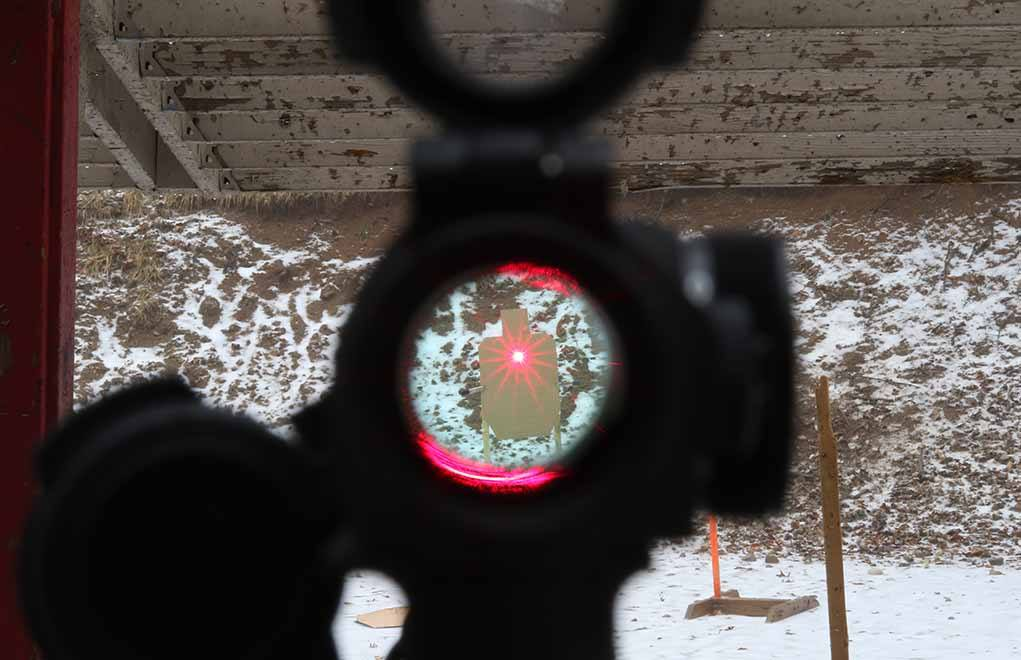
AstigmatismGlossaryAstigmatismAn eye condition that can make red dot reticles appear smeared, starred, or distorted instead of crisp. can cause distortion and blurring of the reticle or dot seen through an optic. The exact appearance of the distortion will depend on the severity of the astigmatismGlossaryAstigmatismAn eye condition that can make red dot reticles appear smeared, starred, or distorted instead of crisp. and the type of optic being used.
Here are some common ways that astigmatismGlossaryAstigmatismAn eye condition that can make red dot reticles appear smeared, starred, or distorted instead of crisp. can affect the view through an optic:
- Starburst effect: One of the most common effects of astigmatismGlossaryAstigmatismAn eye condition that can make red dot reticles appear smeared, starred, or distorted instead of crisp. when looking through an optic is the appearance of starburst patterns around the edges of the reticle or dot. These patterns can make it difficult to focus on the center of the reticle or dot.
- Blurring: AstigmatismGlossaryAstigmatismAn eye condition that can make red dot reticles appear smeared, starred, or distorted instead of crisp. can cause blurring of the reticle or dot, making it difficult to see the details of the aiming point. This can make it more difficult to aim accurately, particularly at longer distances.
- Multiple images: Some people with astigmatismGlossaryAstigmatismAn eye condition that can make red dot reticles appear smeared, starred, or distorted instead of crisp. may see multiple images of the reticle or dot, particularly when looking at it off-center. This can make it difficult to accurately place the aiming point on the target.
- Ghosting: AstigmatismGlossaryAstigmatismAn eye condition that can make red dot reticles appear smeared, starred, or distorted instead of crisp. can also cause ghosting or doubling of the reticle or dot, particularly in low-light conditions. This can make it difficult to distinguish between the true aiming point and the ghosted image. If you suspect that you have astigmatismGlossaryAstigmatismAn eye condition that can make red dot reticles appear smeared, starred, or distorted instead of crisp. and are experiencing these effects when looking through an optic, it is important to consult with an eye doctor to properly diagnose and treat the condition. They may be able to prescribe corrective lenses or other treatments to help reduce the effects of astigmatismGlossaryAstigmatismAn eye condition that can make red dot reticles appear smeared, starred, or distorted instead of crisp. when shooting with optics.
AstigmatismGlossaryAstigmatismAn eye condition that can make red dot reticles appear smeared, starred, or distorted instead of crisp. is a common eye condition that can cause distortion and blurring of vision, particularly when looking through optical devices such as scopes, red dotGlossaryRed DotA non-magnified optic that projects an aiming dot or reticle, commonly used for fast close-range aiming on pistols and rifles. sights, or holographic sights. Here are some tips for dealing with astigmatismGlossaryAstigmatismAn eye condition that can make red dot reticles appear smeared, starred, or distorted instead of crisp. when shooting with optics:
- Consult with an eye doctor: The first step is to consult with an eye doctor to ensure that your astigmatismGlossaryAstigmatismAn eye condition that can make red dot reticles appear smeared, starred, or distorted instead of crisp. is properly diagnosed and treated. Your eye doctor may recommend corrective lenses or other treatments to help improve your vision.
- Try different types of optics: Different types of optics can affect how your astigmatismGlossaryAstigmatismAn eye condition that can make red dot reticles appear smeared, starred, or distorted instead of crisp. affects your vision. For example, some shooters find that red dotGlossaryRed DotA non-magnified optic that projects an aiming dot or reticle, commonly used for fast close-range aiming on pistols and rifles. sights are easier to use with astigmatismGlossaryAstigmatismAn eye condition that can make red dot reticles appear smeared, starred, or distorted instead of crisp. than traditional scopes. Experiment with different types of optics to find the one that works best for you.
- Adjust the focus: Many optics have an adjustable focus that can be used to fine-tune the clarity of the reticle. Experiment with adjusting the focus to find the setting that works best for your eyes.
- Use a larger reticle: A larger reticle can be easier to see and focus on than a smaller one. Consider using a larger reticle or one with a thicker outline to help compensate for your astigmatismGlossaryAstigmatismAn eye condition that can make red dot reticles appear smeared, starred, or distorted instead of crisp..
- Use a lens filter: Some shooters find that using a lens filter, such as a blue or yellow filter, can help reduce the effects of astigmatismGlossaryAstigmatismAn eye condition that can make red dot reticles appear smeared, starred, or distorted instead of crisp. when looking through an optic. Experiment with different filters to find the one that works best for you.
- Practice regularly: Finally, the more you practice shooting with optics, the more familiar you will become with how your astigmatismGlossaryAstigmatismAn eye condition that can make red dot reticles appear smeared, starred, or distorted instead of crisp. affects your vision. Practice regularly to build your skills and confidence, and to find the techniques and equipment that work best for you.